Understanding Addiction: Your Guide to Types, Signs, and How to Take an Addiction Test
The word "addiction" is used often, sometimes casually, to describe anything from a love for a new TV show to a daily coffee habit. But beneath the surface of this common term lies a complex and often misunderstood condition that affects millions. Many people silently wonder, How can I know if I'm addicted?, feeling uncertain about where their habits cross the line into something more serious. This guide is here to unravel the complexities of what is addiction, offering a clear, compassionate, and science-based look at its definition, types, signs, and the hopeful path toward recovery.
True empowerment begins with understanding addiction, moving past stigma and confusion towards clear, compassionate insight. Whether you're navigating personal questions, supporting a loved one, or simply expanding your knowledge, know that you've found a safe and informative space. For those ready to explore their own patterns, a confidential addiction test can be a valuable starting point.
What Exactly is Addiction? Defining a Complex Condition
At its core, addiction is defined as a chronic, relapsing disorder characterized by compulsive engagement in rewarding stimuli despite adverse consequences. It's far more than a lack of willpower or a moral failing; it's a complex condition that fundamentally changes the brain. Let's break down the key components that define it.
More Than Just a Bad Habit: The Neurobiology Behind Addiction
Our brains are wired to seek out and repeat experiences that feel good. Activities like eating, socializing, or achieving a goal trigger the release of a neurotransmitter called dopamine in the brain's reward center. This creates feelings of pleasure and reinforces the behavior. Addictive substances and behaviors hijack this system, flooding the brain with dopamine far more intensely than natural rewards. Over time, the brain adapts to this surge, leading to a diminished response. This means more of the substance or behavior is needed to achieve the same effect (tolerance), and the brain's reward circuitry is altered, making it difficult to find pleasure in everyday activities. This is the brain chemistry shift that drives the cycle of addiction.

Is Addiction a Mental Illness? Understanding the Brain's Role
Yes, addiction is recognized as a mental health condition by major medical and psychiatric organizations, including the American Psychiatric Association (APA). In the Diagnostic and Statistical Manual of Mental Disorders (DSM-5), it is classified under "Substance-Related and Addictive Disorders." This classification is critical because it acknowledges that addiction is a medical issue involving changes in brain function and structure, not a character flaw. Understanding it as a disease helps reduce stigma and emphasizes the need for professional, evidence-based treatment rather than judgment.
The Four C's of Addiction: Core Characteristics to Recognize
To make the concept easier to grasp, experts often refer to the four C's of addiction. These four characteristics help distinguish between a habit and a compulsive disorder:
- Craving: An intense, often overwhelming urge or desire for the substance or to engage in the behavior.
- Loss of Control: Difficulty managing or stopping the use of a substance or engagement in a behavior, often using more or for longer than intended.
- Compulsion: A psychological and sometimes physical need to continue the behavior, even when you want to stop.
- Consequences: Continuing the behavior despite it causing negative problems in your life, such as issues with health, relationships, work, or finances.
Understanding the Landscape: Types of Addiction
Addiction isn't a one-size-fits-all condition. It can manifest through substances or behaviors, each with unique characteristics. Recognizing the different types of addiction is key to understanding the full scope of this challenge and finding the right path for assessment and help.
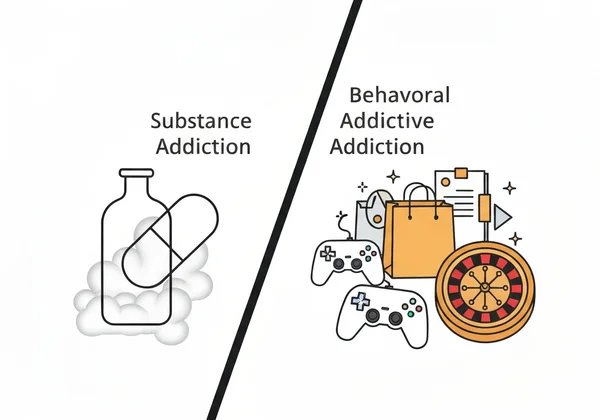
Substance Addictions: Alcohol, Drugs, Nicotine, and Beyond
This is the most traditionally recognized category. It involves the compulsive use of psychoactive substances that alter one's mental state. The body can become physically dependent on these substances, leading to withdrawal symptoms when use is stopped or reduced. Common examples include:
- Alcohol Addiction: Characterized by an inability to control drinking habits.
- Drug Addiction: Encompasses a wide range of substances, including opioids, stimulants, cannabis, and prescription medications.
- Nicotine Addiction: The powerful dependency associated with tobacco products.
If you have concerns in these areas, an alcohol addiction test or a general substance use screen can provide initial insights.
Behavioral Addictions: Exploring Compulsive Actions
Behavioral addictions involve a compulsion to engage in a rewarding non-substance-related behavior. While there is no external chemical, the behavior itself triggers the brain's reward system in a similar way to substances. These compulsive actions can disrupt a person's life just as severely. Examples include:
- Internet & Gaming Addiction: Excessive and compulsive use of the internet, social media, or video games.
- Gambling Addiction: Uncontrollable urge to gamble despite negative consequences.
- Food Addiction: A compulsive relationship with food, often involving highly palatable foods (high in sugar, fat, and salt).
- Sex & Porn Addiction: Compulsive engagement in sexual thoughts or acts.
- Shopping Addiction: Compulsive buying as a way to cope with negative emotions.
Many people are surprised to learn these patterns can be a form of addiction. Taking a confidential online self-assessment can help you better understand your behaviors.
Recognizing the Signals: Key Signs of Addiction
Identifying addiction can be difficult, as it often develops gradually. The signs of addiction can be physical, psychological, and social, and they vary depending on the person and the specific addiction. However, there are common warning signs to look out for.
Common Physical, Psychological, and Social Symptoms
Here are some of the common symptoms that may indicate an addiction:
- Physical Signs: Changes in sleep patterns, dramatic weight loss or gain, poor physical coordination, and signs of withdrawal (e.g., sweating, trembling, nausea).
- Psychological Signs: Unexplained mood swings, increased anxiety or irritability, inability to focus, loss of interest in hobbies, and defensiveness about the behavior.
- Social Signs: Withdrawing from friends and family, neglecting responsibilities at work or school, financial troubles, and secretive behavior to hide the extent of the habit.
The Subtle Shifts: Impact on Relationships, Work, and Daily Life
Often, the clearest signs of addiction are seen in its daily life impact. It might start small—missing a family dinner to play a video game or being late to work due to a hangover. Over time, these incidents become more frequent. Relationships may become strained as the addiction takes priority. Work or academic performance may decline. The person may abandon activities they once loved because their time and energy are consumed by the addictive behavior.
"Am I Addicted?" Self-Reflection Questions to Consider
If you're reading this and feeling a sense of recognition, it can be helpful to ask yourself some direct questions. This isn't a diagnosis, but a tool for honest self-reflection:
- Do I think about the substance or behavior often?
- Have I tried to cut back or stop without success?
- Do I hide the extent of my behavior from others?
- Has my behavior caused problems in my relationships or at work?
- Do I need to do it more and more to get the same feeling?
Answering yes to some of these questions may indicate it's time to explore further. A free addiction quiz can be a private and non-judgmental next step.

Taking the First Step: Where to Find Addiction Help & Assessment
Recognizing potential signs of addiction is a courageous first step. The next is figuring out what to do with that awareness. Fortunately, there are accessible resources to help you gain clarity and find support. Finding addiction help starts with safe and reliable assessment.
The Value of Online Addiction Screening Tools
In today's digital world, online screening tools have become an invaluable resource. Our platform offers a confidential, accessible, and pressure-free environment to explore your concerns. Based on scientifically validated scales, these tests can provide a preliminary risk assessment, helping you understand your behavior patterns more objectively. The anonymity allows you to take that first step without fear of judgment, providing immediate insights that can empower you to consider what's next. You can easily start an assessment from the comfort of your own home.

When to Seek Professional Guidance: Beyond Self-Assessment
It is crucial to remember that an online screening tool is not a substitute for a professional diagnosis. These tests are designed to identify potential risks and raise awareness. If your results from an online addiction test indicate a moderate or high risk, or if you continue to feel concerned about your behaviors, the most important next step is to consult with a healthcare professional, such as a doctor, therapist, or licensed counselor. They can conduct a comprehensive evaluation, provide an accurate diagnosis, and develop a personalized treatment plan.
The Journey Forward: An Overview of Addiction Recovery
The idea of recovery can feel daunting, but it is a journey filled with hope. An addiction recovery guide doesn't offer a quick fix but a pathway toward healing and managing the condition for a fulfilling life. Recovery is a deeply personal process, and it looks different for everyone.
Core Principles of Effective Recovery
While the path varies, certain principles are fundamental to effective recovery. These include acknowledging the problem, learning healthy coping mechanisms to deal with stress and triggers, building a strong support system, and finding new meaning and purpose in life outside of the addictive behavior. Recovery is not just about stopping a behavior; it's about building a new life where that behavior is no longer needed.
Exploring Different Treatment Approaches and Support Systems
There is no single "best" treatment for addiction. Effective approaches are often tailored to the individual's needs and may include a combination of methods. These can range from individual or group therapy (like Cognitive Behavioral Therapy), medical interventions, and participation in peer support systems like 12-step programs (e.g., Alcoholics Anonymous) or other community groups. The goal is to find the combination that provides the right support for long-term success.
Can Addiction Be Cured? Understanding Lifelong Management
This is a common and important question. Because addiction is a chronic condition, "cured" isn't the most accurate term. A better way to think about it is lifelong management, similar to other chronic diseases like diabetes or asthma. While the underlying vulnerability may always exist, a person in recovery can learn to manage their condition effectively, prevent relapse, and live a healthy, productive, and happy life. Recovery is an ongoing journey of growth and self-awareness.
Your Journey Towards Understanding and Healing
Grasping that addiction is a complex brain condition, not a moral failing, marks a powerful shift away from shame and stigma. With this newfound knowledge – understanding types, signs, and where to find support – you gain the power to act. Recovery isn't about flawless execution; it's a journey of consistent progress, beginning with that brave first step: the decision to seek clarity and honest self-assessment.
If anything in this guide resonated with you, we encourage you to take that step. Visit our site to explore a wide range of free and confidential addiction tests. It’s a safe place to begin your journey of self-discovery and move toward a richer, healthier life.
Disclaimer: The information provided in this article is for educational purposes only and is not a substitute for professional medical advice, diagnosis, or treatment. The screening tools offered on this platform are designed to provide preliminary insights. Please consult a qualified healthcare provider with any questions you may have regarding a medical condition.
Frequently Asked Questions About Addiction
Is addiction a choice or a disease?
While the initial decision to use a substance or engage in a behavior is a choice, no one chooses to become addicted. Addiction is considered a disease because it changes the brain's structure and function in ways that make it incredibly difficult to stop, even when faced with negative consequences.
Can someone be a "high-functioning addict"?
Yes. A "high-functioning addict" is someone who manages to maintain their job, relationships, and daily responsibilities despite having an addiction. However, they are often struggling internally, and the condition is typically progressive. Over time, the negative consequences usually become more apparent.
What are the immediate next steps if I think I might be addicted?
The first step is to talk to someone you trust, whether it's a friend, family member, or a healthcare professional. Another helpful action is to take a confidential online screening test to gain a more objective perspective on your behaviors and potential risks.
How does an online addiction test work, and is it confidential?
Our online tests are based on internationally recognized scientific scales. You answer a series of questions about your behaviors and feelings, and the system provides a score indicating your potential risk level. On our platform, all tests are 100% anonymous and confidential. We do not require registration or collect any personal identifying information.
Do these online addiction tests provide medical diagnoses or treatment?
No. Our platform provides screening tools for informational and self-awareness purposes only. Our tests do not provide a medical diagnosis and should not be used as a substitute for a professional evaluation by a qualified healthcare provider.