Psychoactive Drugs Examples, Types, Brain Effects, and When to Seek Support
Psychoactive drugs are substances that affect mental processes such as mood, perception, attention, memory, consciousness, or emotion. The phrase can sound technical, but it includes familiar substances as well as tightly controlled drugs: caffeine, nicotine, alcohol, prescription mental health medications, opioids, stimulants, cannabis, sedatives, hallucinogens, and newer synthetic substances. Some are legal. Some are prescribed. Some are illegal. The key point is not the label on the bottle or the legal status, but how the substance acts on the brain and nervous system. If you are trying to understand your own pattern of use or support someone else, confidential addiction self-screening tools can be a private first step for reflection, not a substitute for professional care.
What Makes a Drug Psychoactive?
A drug is psychoactive when it changes how the central nervous system processes signals. That may mean increasing alertness, slowing reaction time, changing pain perception, altering sensory experience, affecting sleep, shifting mood, or influencing judgment. The effect can be mild, intense, short-lived, or long-lasting depending on the substance, dose, route of use, the person's health, and whether other substances are involved.
The term also does not automatically mean "addictive." Many psychoactive medications are used under medical supervision to treat symptoms such as depression, anxiety, psychosis, sleep disorders, attention problems, or pain. At the same time, psychoactive substances can carry real risks when they are misused, mixed, taken without guidance, or used to cope with distress in a repeated pattern.
This is why a careful definition matters. "Psychoactive" describes an effect on mental processes. "Psychotropic" is often used in a similar way, especially for medications that influence mood, thought, or behavior. In everyday health writing, the two terms may overlap. In clinical and legal settings, exact definitions can depend on the classification system, law, or medical context.
4 Types of Psychoactive Drugs and Common Examples
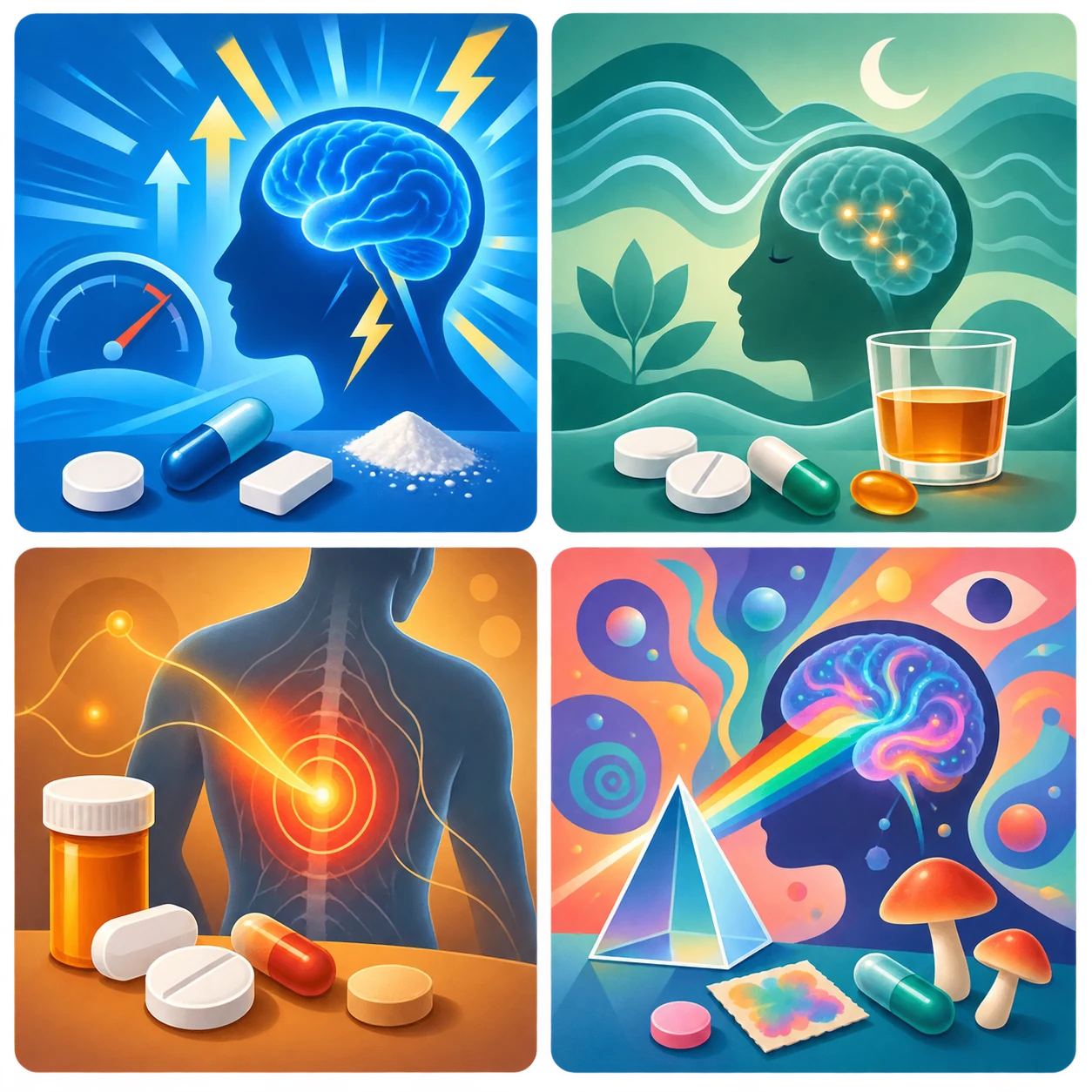
Many articles list more than four categories because drug effects overlap. For a practical introduction, the 4 types of psychoactive drugs most people need to recognize are stimulants, depressants, opioids, and hallucinogen or perception-altering substances. Cannabinoids, dissociatives, inhalants, MDMA-related drugs, and synthetic substances may be discussed as separate classes in medical or public health systems, but they still fit the larger idea of substances that affect mental processes.
Stimulants
Stimulants generally increase activity in parts of the brain and body. Common examples include caffeine, nicotine, cocaine, methamphetamine, and prescription stimulant medications used for conditions such as ADHD. Possible effects may include increased wakefulness, faster heart rate, reduced appetite, restlessness, talkativeness, or a temporary feeling of energy and confidence. Higher-risk use can be associated with anxiety, sleep disruption, impulsive decisions, cardiovascular strain, or a crash after the effects fade.
Depressants and sedatives
Depressants slow certain central nervous system functions. Alcohol, benzodiazepines, barbiturates, and some sleep medications are examples. Effects can include relaxation, drowsiness, slower reaction time, reduced inhibition, impaired coordination, and memory gaps. Combining depressants with each other, or with opioids, can be especially risky because breathing, alertness, and decision-making may be affected more strongly than expected.
Opioids
Opioids are psychoactive because they can affect pain perception, mood, reward, relaxation, and thinking. Examples include morphine, oxycodone, hydrocodone, fentanyl, heroin, and some medications used in opioid treatment. Prescription opioids can have appropriate medical uses, but repeated use can lead to tolerance, dependence, withdrawal symptoms, or opioid use disorder in some people. If opioids are involved, professional guidance is especially important because overdose risk can be serious and time-sensitive.
Hallucinogens, cannabinoids, and other perception-altering substances
Hallucinogens and related substances can alter perception, sensory processing, emotion, and sense of time. Examples may include LSD, psilocybin, mescaline, ketamine, PCP, cannabis, synthetic cannabinoids, and some newer psychoactive substances. Effects vary widely. Some people report sensory changes or altered meaning, while others experience confusion, panic, paranoia, or impaired judgment. With synthetic or unregulated products, the contents and strength may be uncertain.
How Psychoactive Drugs Affect the Brain and Mental Processes
Psychoactive drugs influence communication between brain cells. They may mimic natural chemical messengers, block them, increase their release, slow their reuptake, or change how receptors respond. This can affect reward, motivation, attention, pain, fear, sleep, memory, and decision-making. That is why two substances can both be psychoactive while feeling very different in the body.
Short-term effects are often what people notice first: feeling more awake, more relaxed, more social, less inhibited, less pain-aware, emotionally flat, unusually confident, detached, or perceptually altered. These changes can also affect behavior. A person may drive when coordination is reduced, send messages they would normally avoid, spend more money, argue more easily, skip meals, miss sleep, or take more of a substance because judgment has shifted.
With repeated use, the brain and body may adapt. Some people develop tolerance, meaning the same amount has less noticeable effect. Some develop dependence, meaning stopping or reducing use brings withdrawal symptoms. These processes are not moral failures. They are signs that the nervous system has adjusted to the substance. Still, they can make change harder and may require qualified support.
Not every psychoactive drug causes the same risk profile. Dose, frequency, age, mental health, trauma history, sleep, genetics, physical health, and mixing substances all matter. A legal substance can still be harmful. An illegal substance is not the only kind that can affect the brain. A prescribed medication can be helpful when used as directed, but risky when taken differently than intended.
Psychoactive Drugs Symptoms, Effects, and Warning Signs
People often search for "psychoactive drugs symptoms," but a better phrase is "possible effects or warning signs." Symptoms can sound like a medical label, while the real question is usually whether a pattern deserves attention. Effects may be physical, emotional, cognitive, or social.
Possible short-term effects include unusual energy or sleepiness, slower reaction time, enlarged or pinpoint pupils, changes in appetite, nausea, sweating, tremors, dry mouth, dizziness, confusion, anxiety, euphoria, emotional swings, reduced inhibition, memory gaps, or changes in sensory perception. These signs are not enough by themselves to identify a specific drug, and they can also have other causes.
Pattern-based warning signs may be more useful for self-reflection. Consider whether use is becoming more frequent, harder to limit, more secretive, more expensive, or more central to coping. Notice whether responsibilities, relationships, sleep, school, work, finances, safety, or mood are being affected. Also notice whether stopping leads to strong cravings, withdrawal-like discomfort, or repeated returns to use despite clear downsides.
If you are unsure how to think about these patterns, online screening resources for substance-related concerns can help organize your observations. A screening result is not a clinical answer, but it can give you language for a conversation with a health professional, counselor, trusted family member, or recovery support service.
Legal Psychoactive Drugs Are Still Psychoactive
"Legal psychoactive drugs" is a common search because legality feels like it should answer the risk question. It does not. Caffeine, nicotine, alcohol, and many prescribed medications can be legal and psychoactive. Their legal status depends on jurisdiction, age rules, prescription rules, public health policy, and controlled-substance schedules. Their safety depends on context, dose, frequency, health conditions, and whether they are combined with other substances.
Alcohol is a familiar example. It is legal for adults in many places, but it can slow reaction time, reduce inhibition, impair memory, and contribute to dependence in some people. Caffeine is also psychoactive, usually with a much lower risk profile for many adults, but it can still affect sleep, anxiety, and heart sensations. Prescription sedatives, stimulants, opioids, antidepressants, antipsychotics, and mood stabilizers may be appropriate when used as directed, but should be handled carefully and discussed with a prescribing professional.
The same caution applies to products marketed as natural, herbal, research chemicals, or "legal highs." A label does not guarantee predictable strength, purity, legality, or safety. If a substance is meant to change mood, energy, perception, or consciousness, it deserves thoughtful caution.

When to Seek Support or Use a Private Screening Tool
You do not have to wait for a crisis to ask better questions about psychoactive drugs. A helpful next step may be warranted if substance use is becoming difficult to limit, if you are mixing substances, if opioids or sedatives are involved, if use is affecting mental health, or if someone close to you has expressed concern. Seek urgent local help if there is trouble breathing, loss of consciousness, chest pain, severe confusion, risk of self-harm, violence, or overdose concern.
For non-emergency reflection, write down what is being used, how often, what triggers it, what changes afterward, and what has happened when you tried to cut back. Bring that information to a qualified professional if you can. You can also review a private first-step addiction risk check to organize your thoughts before a conversation. The goal is not to label yourself. It is to notice patterns early enough to choose safer next steps.
FAQ
What are examples of psychoactive drugs?
Examples include caffeine, nicotine, alcohol, cannabis, cocaine, amphetamines, methamphetamine, benzodiazepines, barbiturates, opioids such as oxycodone or fentanyl, hallucinogens such as LSD or psilocybin, dissociatives such as ketamine or PCP, and some prescription mental health medications. The list is broad because psychoactive means the substance affects mental processes.
Are opioids psychoactive?
Yes. Opioids are psychoactive because they can affect pain perception, mood, relaxation, reward, and thinking. Some opioids are prescribed for pain or used in treatment settings, while others are illegal or used outside medical guidance. Opioids deserve special caution because tolerance, dependence, withdrawal, and overdose risk can occur.
Are all drugs psychoactive?
No. Many drugs or medicines act mainly on parts of the body without directly changing mood, perception, consciousness, cognition, or emotion in a noticeable way. A blood pressure medication, antibiotic, or topical cream may be a drug without being psychoactive in the usual sense. Psychoactive drugs are the subset that affect mental processes through the nervous system.
What are psychoactive medications?
Psychoactive medications are prescribed drugs that affect mood, thought, sleep, attention, pain, or behavior. Examples can include antidepressants, anti-anxiety medications, antipsychotics, mood stabilizers, stimulants, sedatives, sleep medications, and opioid pain medicines. They can be useful when prescribed and monitored, but they should be taken only as directed.
What is the difference between psychoactive and psychotropic drugs?
In many everyday contexts, the terms overlap. Psychoactive usually means any substance that affects mental processes. Psychotropic is often used for medications or substances that affect mood, thought, or behavior, especially in mental health contexts. Exact usage can vary by medical, legal, or policy setting.
Is caffeine a psychoactive drug?
Yes. Caffeine is psychoactive because it can increase alertness, reduce perceived tiredness, and affect sleep or anxiety in some people. For many adults, moderate caffeine use is socially common and lower risk than many other psychoactive substances, but it still acts on mental processes.
How do psychoactive drugs affect mental processes?
They alter signaling in the brain and nervous system. Depending on the substance, they may change attention, memory, judgment, pain perception, mood, motivation, sensory processing, reaction time, or consciousness. These effects are why people may feel different while using them and why behavior can change during or after use.