How Long Does Percocet Stay in Your System?
If you searched "how long does Percocet stay in your system," you are probably trying to understand two related but different things: how long the effects may last, and how long a drug test might still detect oxycodone or its metabolites. Percocet is a prescription medicine that combines oxycodone, an opioid pain medicine, with acetaminophen. Detection windows vary by test type, dose pattern, metabolism, liver and kidney health, and the sensitivity of the test. This guide offers general education, not medical advice. If Percocet use has started to feel hard to control, private self-reflection tools for addiction risk can be a gentle first step before talking with a qualified professional.
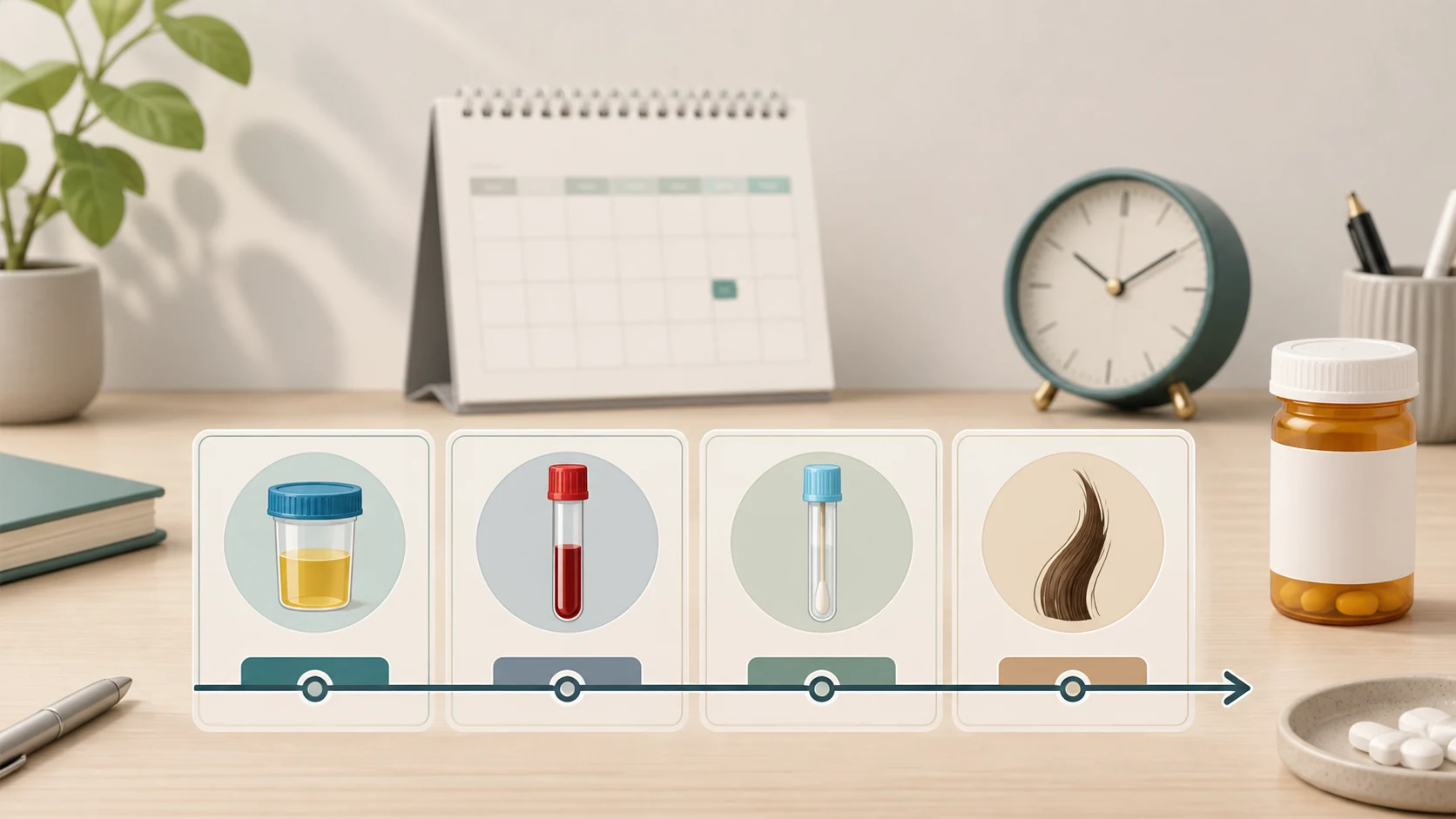
The Short Answer: Detection Is Usually Days, Not Hours
For many urine drug tests that specifically include oxycodone, a broad educational estimate is about 1 to 3 days after last use. Some testing programs or treatment-center guides cite windows closer to 3 to 4 days, especially when use has been repeated or the test has different cutoffs. Blood and saliva often reflect more recent use, while hair testing can show a longer history of exposure, sometimes measured in months rather than days.
Those ranges are not a personal prediction. A test result depends on the specimen collected, the lab method, the cutoff level, the timing of the last dose, and whether the panel is designed to detect oxycodone. One important detail: a basic "opiate" screen may not always detect semi-synthetic opioids like oxycodone reliably unless oxycodone or oxymorphone is included in the panel.
The practical takeaway is simple: Percocet's noticeable effects may fade well before every trace is gone from a testable sample. Feeling "normal" is not the same as being outside a detection window.
Percocet, Oxycodone, and Acetaminophen: What Is Being Detected?
Percocet contains two active ingredients. Oxycodone is the opioid component that drug tests are usually trying to identify. Acetaminophen is the non-opioid pain reliever component. Standard opioid drug testing is generally focused on oxycodone and related metabolites such as oxymorphone or noroxycodone, not on acetaminophen.
That distinction matters because people sometimes use "Percocet," "oxycodone," and "pain pills" as if they mean the same thing. In testing language, the exact substance and the exact panel matter. A test may be ordered for workplace screening, pain-management monitoring, emergency care, legal requirements, or treatment planning. Each context can use different methods and confirmation steps.
It also matters for safety. Percocet is not only an opioid. Because it includes acetaminophen, taking more than directed or combining it with other products that contain acetaminophen can raise the risk of serious liver harm. Combining oxycodone with alcohol, benzodiazepines, sleep medicines, or other sedating substances can increase the risk of dangerous breathing problems.
Detection Windows by Test Type
The table below gives general educational ranges. It should not be used to make legal, employment, driving, or medical decisions.
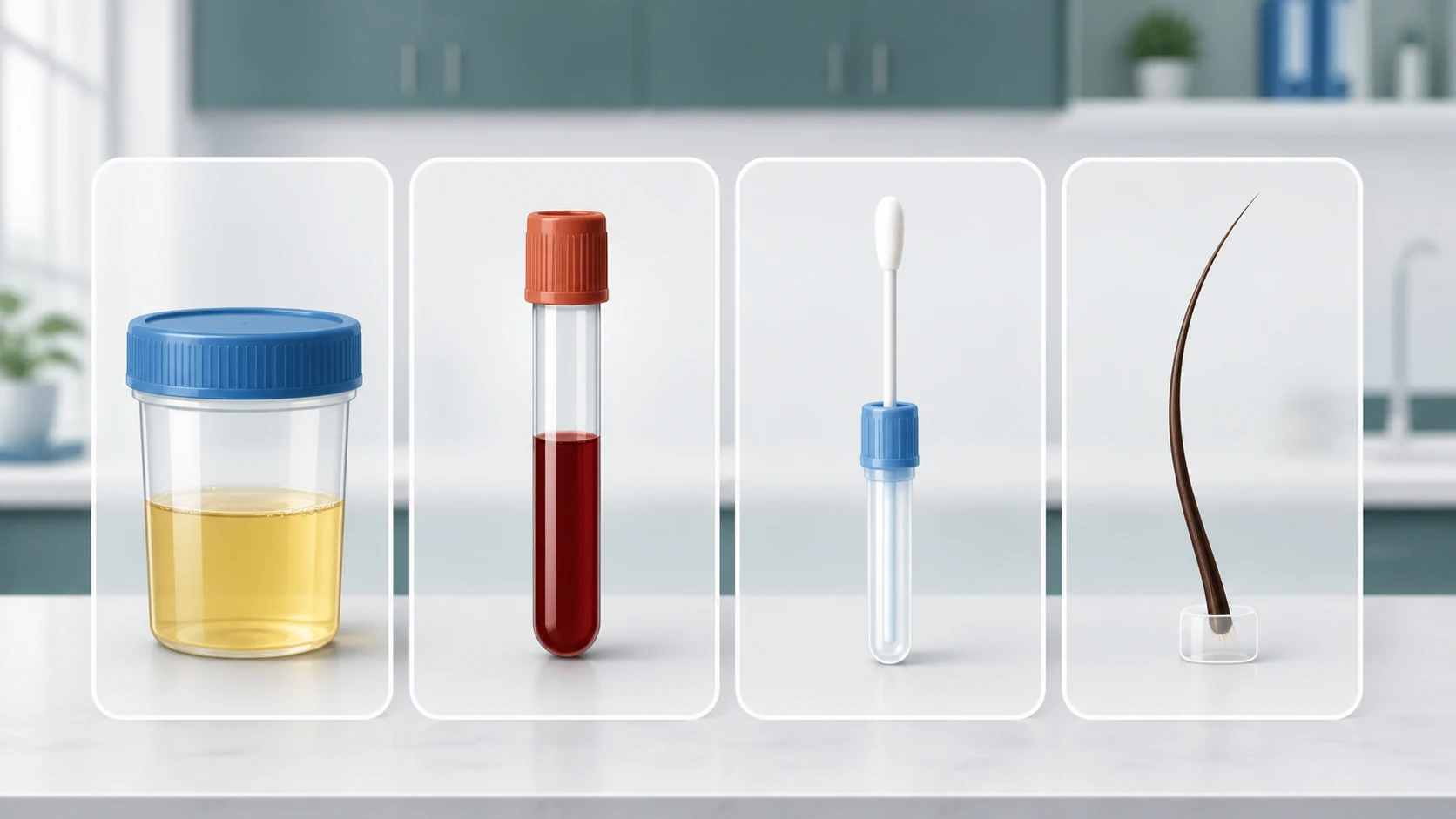
| Test type | General detection window for oxycodone/Percocet | Notes |
|---|---|---|
| Urine | About 1 to 3 days for many oxycodone-specific tests | May be longer with repeated use, higher doses, slower clearance, or different cutoffs |
| Blood | Often shorter, commonly around a day for recent exposure | More closely tied to recent use than long-term history |
| Saliva/oral fluid | Often up to 1 to 2 days, sometimes longer depending on the test | Collection timing and test method matter |
| Hair | Up to about 90 days in many drug-testing contexts | Better for longer lookback, not precise timing of recent use |
Urine testing is common because it is practical and usually has a longer window than blood. Blood may be used when recent exposure or impairment is the central question, such as in emergency settings. Oral fluid testing can be useful for recent use. Hair testing has a long lookback but cannot tell you exactly when a dose was taken.
If you are reviewing results from a lab, ask what was actually tested. "Opiates negative" and "oxycodone negative" are not always the same statement. Confirmation testing can also change the interpretation of an initial screen.
What Can Make Percocet Stay Detectable Longer?
Detection time is not controlled by one factor. It reflects how the body absorbs, metabolizes, and eliminates oxycodone, plus how the test is designed.
Dose and frequency matter. A single prescribed dose may clear differently from repeated daily use. Longer patterns of use can leave more metabolites for the body to process.
Individual metabolism matters. Age, body composition, hydration status, and overall health can influence timing, though hydration should not be treated as a reliable way to change a test result.
Liver and kidney function matter. Oxycodone is metabolized in the liver and cleared in part through the kidneys. Health conditions affecting either system can change how long the drug or its metabolites remain measurable.
Formulation and other substances matter. Immediate-release and extended-release oxycodone products do not behave exactly the same. Alcohol and other central nervous system depressants can also affect safety, alertness, and overdose risk, even when they do not simply "extend" a test window in a predictable way.
Testing method matters. Cutoff levels, screening technology, and confirmation methods can produce different results. That is why the best answer to a specific test question usually comes from the ordering clinician, lab, or medical review officer.
How Long Does It Take for Oxycodone to Wear Off?
The pain-relieving and sedating effects of immediate-release oxycodone are commonly discussed in hours, not days. Many people feel effects within the first hour, and pain relief is often described as lasting several hours. That does not mean everyone is safe to drive, work, or make sensitive decisions at the same time point.
"Wearing off" can mean different things:
- Pain relief is fading.
- Drowsiness is less noticeable.
- The person feels mentally clearer.
- The drug is no longer present at a testable level.
Those are not identical milestones. Someone may feel less pain relief but still be drowsy, slowed, lightheaded, or impaired. Another person may feel awake but still test positive. This is why it is safer to separate comfort questions from testing questions.
If you are prescribed Percocet, follow the prescribing instructions and ask your clinician before changing how you take it. If you have been using opioids regularly, stopping suddenly can cause withdrawal symptoms and may need professional support.
How Long After Taking Percocet Can You Drive?
There is no universal number of hours that makes driving safe after Percocet. Oxycodone can cause drowsiness, dizziness, slowed reaction time, and lightheadedness. The risk can be higher when you are new to the medicine, after a dose change, after poor sleep, or when Percocet is combined with alcohol or other sedating medicines.
A safer rule is this: do not drive or operate equipment while you feel impaired, sleepy, dizzy, slowed, confused, or not fully alert. If you are prescribed Percocet and driving is part of your work or caregiving responsibilities, ask your prescriber for specific guidance. Laws and workplace policies may also apply.
If you took Percocet without a prescription, took more than prescribed, mixed it with alcohol or sedatives, or feel unusually sleepy or slow, avoid driving and seek medical guidance. If someone has slow breathing, cannot stay awake, has blue or gray lips, or is difficult to wake, call emergency services immediately.

How Long Will You Test Positive for Pain Pills?
"Pain pills" is a broad phrase. It may refer to oxycodone, hydrocodone, codeine, morphine, tramadol, fentanyl, or another medication. Each has different metabolites and testing behavior. A result also depends on whether the test is a broad opioid panel, a standard opiate screen, or a test that specifically includes oxycodone.
For Percocet specifically, oxycodone-focused urine testing is commonly estimated around 1 to 3 days, with some situations stretching longer. For other opioids, the window may be shorter or longer. Fentanyl, for example, is often tested separately and should not be assumed to appear on every opioid screen.
If your concern is a prescribed medication, keep the prescription information available and be honest with the clinician, lab, medical review officer, or workplace testing contact. If your concern is nonmedical use, withdrawal, or fear that use is becoming compulsive, consider a confidential conversation with a healthcare professional, counselor, or support service.
Signs That Percocet Use May Need More Support
Needing information about detection time does not automatically mean someone has a substance use problem. People search for this topic for many reasons: prescription questions, workplace policies, pain-management monitoring, caregiving concerns, or fear after taking a pill.
Still, it may be time to pause and seek support if any of these patterns sound familiar:
- Taking Percocet more often or in larger amounts than prescribed.
- Feeling unable to get through the day without it.
- Using it to manage stress, depression, or emotional pain rather than prescribed pain.
- Mixing it with alcohol, sleep medicines, benzodiazepines, or other substances.
- Spending a lot of time finding, using, or recovering from opioids.
- Feeling withdrawal symptoms when trying to reduce or stop.
- Hiding use from family, friends, or clinicians.
- Continuing use despite work, school, relationship, health, or legal problems.
These signs are not a label. They are signals that a more supportive next step could help. Some people benefit from counseling, peer groups such as 12-step meetings, NA, SMART Recovery, or structured treatment. Some opioid use disorder treatments involve medications, including buprenorphine, methadone, or naltrexone products such as Vivitrol, but those choices require professional evaluation and careful timing.

A Private Way to Reflect on Risk and Next Steps
If your search started with a test window but led to bigger questions about control, safety, or recovery, you do not have to solve everything at once. You can begin with one practical step: write down what happened, when you last used Percocet, whether it was prescribed, what else was taken, and what worries you most. Bring that information to a clinician, counselor, pharmacist, or trusted support person.
For a low-pressure starting point, AddictionTest.me offers confidential addiction screening designed for self-reflection and education. It does not replace professional care, but it can help you organize your thoughts before a conversation. The goal is not to shame yourself. The goal is to notice patterns early enough to choose safer next steps.
If you might be in danger right now, use emergency help instead of an online resource. Warning signs can include trouble breathing, extreme sleepiness, loss of consciousness, chest pain, severe confusion, or suspected overdose. In the United States, calling emergency services or using naloxone when available can be lifesaving while help is on the way.
Moving From Detection Questions to Safer Choices
Knowing how long Percocet stays in your system can reduce uncertainty, but it should not be the only question. A more useful set of questions is: Am I safe today? Do I need medical advice about a prescription? Am I worried about withdrawal? Has my use become harder to control? Who can I talk with before this becomes more stressful?
If the answer points toward concern, explore addiction recovery resources and consider reaching out to a qualified professional or a local support service. Recovery can include medical care, counseling, peer support, harm reduction, family support, and practical planning. You do not need a perfect explanation before asking for help. You only need enough honesty to take the next careful step.

FAQ
How long does Percocet stay in urine?
For many oxycodone-specific urine tests, a general estimate is about 1 to 3 days after last use. Some tests or repeated-use situations may run longer. The lab method, cutoff, dose pattern, timing, and individual health factors all matter.
How long does oxycodone stay in a person's system?
Oxycodone's noticeable effects are often measured in hours, while detection can last longer. Urine detection is commonly measured in days, and hair testing can reflect a longer history. A specific answer depends on the test type and the person.
How long does it take for oxycodone to wear off?
Immediate-release oxycodone effects commonly fade over several hours, but feeling less pain relief does not always mean you are alert enough for driving or other risky tasks. Follow your prescription instructions and ask a clinician if you are unsure.
Can Percocet show up after the effects are gone?
Yes. The effects can wear off before oxycodone or its metabolites are no longer detectable. This is especially true for urine and hair testing.
Will every opioid test detect Percocet?
Not necessarily. Some basic opiate screens are better at detecting morphine-like substances and may need a specific oxycodone component to identify Percocet use reliably. Ask what the panel includes.
What should I do if I am worried about Percocet withdrawal?
If you have used Percocet regularly, do not abruptly stop or change your dose without medical guidance. A healthcare professional can help you plan a safer reduction and discuss treatment or recovery supports when needed.
Is it safe to drive the day after taking Percocet?
It depends on how you feel, your dose, timing, other substances, sleep, and your medical situation. Do not drive if you feel sleepy, dizzy, slowed, confused, or lightheaded. Ask your prescriber for advice that fits your situation.