High-Functioning Addiction Test: Hidden Signs & What to Do
The world sees your success: the promotions, the academic achievements, the polished social media presence. You are the epitome of control, competence, and ambition. Yet, behind this carefully constructed façade, a private battle rages. It’s a cycle of behavior you justify as "blowing off steam" or a "reward" for your hard work, but a quiet voice wonders if it’s something more. If this sounds familiar, you might be wrestling with the complex reality of being a high-functioning addict. But what are the signs of addiction when everything on the surface looks perfect?
This article will pull back the curtain on the illusion of control. We will explore the subtle signs that your drive for success might be masking a dependency. Understanding these patterns is not about judgment; it is the first, most courageous step toward self-awareness. For a completely private first step, a confidential addiction test can offer valuable insight. This initial addiction test can provide the clarity needed to move forward.
Understanding High-Functioning Addiction: Beyond the Stereotypes
The term "high-functioning addict" can seem like a contradiction. Stereotypes often paint a picture of addiction that involves rock-bottom moments and visible life collapse. However, this narrow view overlooks a significant population that maintains jobs, relationships, and responsibilities, all while grappling with a substance or behavioral dependency. The core of high-functioning addiction isn't the absence of negative consequences—it's the ability to hide or manage them so effectively that others, and often the individuals themselves, remain unaware of the problem's severity.
This is not a formal medical diagnosis but a descriptive term for someone whose addiction has not yet led to the external ruin typically associated with the word. They are masters of compartmentalization, keeping their addictive behaviors separate from their professional and public lives. This creates a dangerous illusion of control, making it even harder to recognize and address the underlying issues. An online addiction test can be a useful tool for private reflection.
Beyond Stereotypes: A Look at the Hidden Addiction
Forget the outdated clichés. A person struggling with a hidden addiction could be the CEO who drinks heavily every night to "unwind," the straight-A student dependent on prescription stimulants to study, or the devoted partner secretly battling a gambling or porn addiction online. They are often intelligent, disciplined, and highly motivated, using the very skills that fuel their success to conceal their dependency.
Their success becomes both a shield and a justification. "How can I have a problem if I'm still excelling at work?" they might ask themselves. This line of reasoning is a powerful form of denial that keeps the cycle of addiction spinning, often delaying the search for help until a significant crisis forces the issue into the open.
The Double Life: Managing Appearances and Dependencies
Living as a high-functioning addict means leading a double life. There is the public self—successful, reliable, and composed—and the private self, who engages in compulsive behaviors. This duality requires immense mental and emotional energy. It involves constant planning, secret-keeping, and managing appearances to ensure no one discovers the truth.
This balancing act can manifest in scheduling work meetings around hangovers, attributing financial strain to anything but a shopping compulsion, or justifying excessive time online as "research." The individual becomes an expert at creating plausible excuses and rationalizations, further entrenching their denial and isolating them from genuine connection. If you're wondering about your own habits, a free addiction quiz can be a starting point.

What are the Signs of Addiction for a High-Functioning Person?
Because high-functioning individuals don't fit the stereotypical mold, identifying the successful addict signs requires looking beyond the obvious. The clues are often subtle behavioral shifts, internal emotional states, and the hidden costs of maintaining their "performance." It’s less about what is lost and more about what it takes to keep everything from falling apart.
Are you constantly exhausted despite your achievements? Do you feel an ever-widening gap between who you are and who you pretend to be? These are the quiet alarms that suggest a deeper issue may be at play. A specialized addiction test can help translate these feelings into objective feedback.
Is Your "Success" a Symptom? The Unseen Costs of High Performance
For some, the very behaviors that drive their success are intertwined with their addiction. A workaholic might be using their career to avoid emotional turmoil, leading to chronic stress and burnout. Their dedication is praised by employers, but it comes at the cost of their mental health and personal relationships. Their "addiction" is to work itself, a compulsion that is often socially rewarded.
Other signs include a growing reliance on substances like alcohol or caffeine to maintain high energy levels or to decompress from intense pressure. What starts as a coping mechanism can slowly morph into a dependency. The "work hard, play hard" mentality can blur the line between healthy release and a pattern of substance abuse used to sustain an unsustainable lifestyle.
Uncovering Common Compulsive Behavior Patterns: Signs and Self-Assessment
Beyond the substance itself, certain behavioral patterns often emerge. Look for signs of increasing tolerance, where you need more of the substance or behavior to achieve the same effect. Perhaps you find yourself spending significant time thinking about, engaging in, or recovering from the behavior, even when it means neglecting other responsibilities or hobbies you once enjoyed.

Other red flags include:
- Failed attempts to cut back: You've tried to moderate your drinking, limit your online gaming, or stop compulsive shopping, but find yourself unable to stick to your own rules.
- Defensiveness and irritability: You become angry or defensive when someone gently questions your habits.
- Using the behavior as your primary coping tool: Whether it's stress, sadness, or boredom, your first impulse is to turn to your addiction for relief.
- Risk-taking: You engage in behaviors you normally wouldn't, like driving after drinking or spending money you don't have.
If these patterns resonate, it may be time for an honest self-assessment. Tools like an internet addiction test can provide a confidential way to explore these concerns, and a general addiction test can offer a broader perspective.
The Internal Battle: Shame, Isolation, and the Quest for Control
The most significant struggle for a high-functioning addict is often internal. The constant pressure to maintain a flawless exterior while managing a secret dependency creates a storm of shame, anxiety, and profound isolation. This internal conflict is exhausting and erodes one's sense of self-worth, making the addiction a paradoxical source of both comfort and misery. This struggle is a key part of poor mental health.
Why Admitting a Problem Is So Hard Due to Denial
For high-achievers, admitting a problem can feel like admitting failure. Their entire identity may be built on being capable, in control, and self-reliant. Acknowledging an addiction threatens this self-concept, triggering immense fear and shame. Denial becomes a powerful defense mechanism, not just to fool others, but to convince themselves that they still have everything under control.
The fear of judgment is another significant barrier. What will colleagues, family, or friends think? The potential professional and social fallout can feel too catastrophic to risk, trapping them in a cycle of silence and secrecy. This is why anonymous resources are so critical; they offer a safe space to explore the issue without fear. Taking a work addiction test or another confidential addiction test can be a private first step.
The Erosion of Trust and the Primary Coping Mechanism
While a high-functioning addict may keep their job, their relationships often pay the price. The secrecy, broken promises, and emotional unavailability required to sustain an addiction slowly erode trust with loved ones. Partners and family members may sense that something is wrong but can't pinpoint the issue, leading to confusion and conflict.
The addiction becomes the primary coping mechanism, replacing authentic connection and healthy emotional expression. Instead of talking through a problem with a partner, the individual turns to their compulsive behavior for solace. This deepens their isolation, making it even harder to break free from the cycle without help.

Taking the First Step: Acknowledgment & Professional Help for Addiction
The journey to recovery begins with a single, powerful step: acknowledgment. It’s the moment you stop rationalizing and start questioning. Recognizing that your success doesn't make you immune to addiction is not a sign of weakness; it's a profound act of strength and self-care. This is the first step toward getting professional help for addiction.
The Power of Self-Reflection and Early Intervention Through Self-Assessment
You don't have to wait for a crisis to make a change. Early intervention can prevent the severe consequences that often accompany long-term addiction. A confidential addiction test is an empowering way to gain clarity in a private, non-judgmental setting. It provides objective feedback based on scientifically validated questions, helping you see your behaviors more clearly without judgment.
This initial addiction test can break through the wall of denial and provide the motivation needed to explore further options. Whether it’s a food addiction test or another screening, knowledge is your most powerful tool.
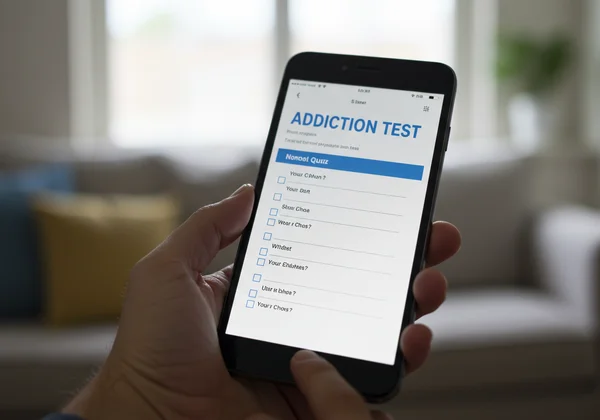
When & How to Start Seeking Help for Addiction
If your self-assessment results or personal reflections indicate a potential problem, it is crucial to seek professional guidance. Remember, online screening tools are not a diagnosis. An addiction test is a screener, not a verdict. They are designed to help you identify risk and decide on the next steps.
Start by speaking with a trusted healthcare provider, therapist, or counselor specializing in addiction. They can provide a comprehensive evaluation and help you create a personalized plan for recovery. Seeking help is a sign of courage and a commitment to your true, long-term well-being—something far more valuable than any external measure of success.
Beyond the Façade: Finding Your Path Forward
The relentless pace of living as a high-functioning individual with an unaddressed addiction is an exhausting performance, sacrificing your true well-being for appearances. You have the power to stop running this marathon that never ends.
Recognizing these hidden signs is not an admission of failure—it's the first, most powerful step toward reclaiming your life. It's about choosing authenticity over appearance and lasting health over a temporary habit. Your journey forward starts with a single moment of honest self-reflection.
Take that brave, confidential step today. Our free, science-based addiction test can provide the clarity you need to start building a life that doesn't just look successful, but feels genuinely whole.
Disclaimer: This article is for informational purposes only and does not constitute medical advice. These online screening tools are designed for self-assessment and are not a substitute for a professional diagnosis. If you are concerned about your health, please consult a qualified healthcare provider.
Frequently Asked Questions About High-Functioning Addiction
What are the typical signs of a high-functioning addict?
Typical signs include leading a double life, using substances or behaviors to cope with stress, feeling irritable when unable to engage in the behavior, neglecting hobbies for the addiction, and rationalizing or hiding the extent of the problem from others while still meeting major life responsibilities.
Can a highly successful person really be addicted to something?
Absolutely. Success does not grant immunity to addiction. In fact, the high-stress, high-pressure environments that often accompany success can contribute to the development of dependencies as individuals seek ways to cope or maintain performance.
Is high-functioning addiction "less serious" than other types of addiction?
No. While the external consequences may be less visible, the internal damage—psychological distress, health risks, and relationship strain—is just as severe. The "high-functioning" label simply means the individual has been able to postpone or conceal the inevitable consequences for longer, which can sometimes make recovery more complex.
How can I know if my behavior is becoming an addiction?
A key indicator is a loss of control. Ask yourself: Can I stop when I want to? Is the behavior causing negative consequences in my life (even if only I know about them)? Is it taking up more and more of my mental and emotional energy? If you're unsure, taking a confidential online addiction test can provide objective insight.
Where can I find a confidential online addiction test?
You can find a wide range of free, confidential, and science-based tests at AddictionTest.me. The platform offers assessments for everything from alcohol and internet use to work and shopping, allowing you to explore your concerns privately and take the first step toward understanding your habits.