Gambling Addiction Test: Am I a Compulsive Gambler?
Are your bets becoming more than just a game? Today's digital world makes online gambling super accessible. You can bet from your phone anytime. But it often blurs the line between harmless fun and a real problem. It's easy to place a bet during a lunch break or spend an evening at an online casino from your couch. But when does this casual activity cross a line?
If you're questioning your relationship with gambling, feeling financial strain, or noticing it impact your life, you're not alone. Many people find themselves wondering if their habits are still under their control. This guide is here to help you understand the signs of compulsive gambling. We will also introduce you to a confidential, science-based online test that can provide clarity and help you gain awareness and take a brave first step.

Understanding Compulsive Gambling Signs
Recognizing the signs of problem gambling is the first and most crucial step toward understanding your behavior. These signs aren't always dramatic or obvious; they often build up slowly over time. They fall into behavioral, emotional, and financial categories, creating a complex picture that affects every part of a person's life.
What are the Behavioral Indicators of Problem Gambling?
Problem gambling isn't defined by how often you bet or how much you lose. It's defined by its impact on your actions and priorities. Compulsive gambling hits when the urge is hard to fight, and it continues regardless of the consequences.
Here are some common behavioral indicators:
- Needing to gamble with increasing amounts of money to achieve the desired excitement. This is known as tolerance, similar to substance addiction.
- "Chasing" losses by betting more to try and win back money you have lost. This often leads to a deeper cycle of financial problems.
- Lying to family members, therapists, or others to conceal the extent of your involvement with gambling.
- Losing control and feeling restless or irritable when you try to cut down or stop gambling.
- Gambling to escape problems or relieve feelings of helplessness, guilt, anxiety, or depression.
- Neglecting important responsibilities at work, school, or home because of gambling.
- Committing illegal acts such as fraud or theft to finance your gambling.
If these behaviors feel familiar, it may be a sign that your gambling habits are becoming problematic. An objective self-assessment can help you see these patterns more clearly.
The Emotional and Financial Impact of Gambling Habits
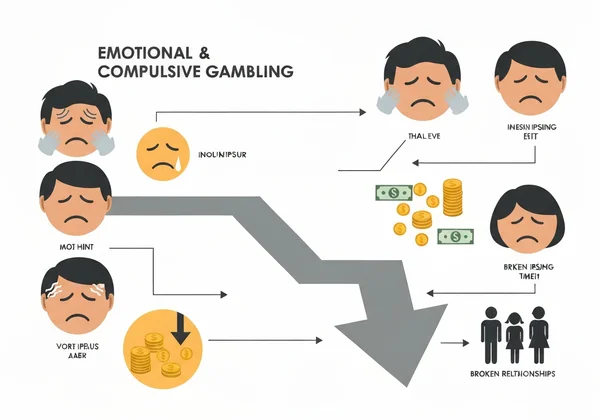
The consequences of compulsive gambling extend far beyond the bets themselves. The emotional and financial toll can be devastating, affecting your mental well-being, relationships, and stability. Wins bring a huge high. Losses can crush you right after.
On an emotional level, problem gambling can lead to:
- Constant feelings of stress, anxiety, and depression. The pressure to win and the guilt of losing create a heavy mental burden.
- Increased irritability and mood swings. This can strain relationships with friends and family who may not understand the source of the agitation.
- Feelings of shame and hopelessness. As debts mount and lies become necessary, it's common to feel trapped and isolated.
Financially, the impact is often more visible:
- Accumulating significant debt on credit cards, from loans, or by borrowing from others.
- Selling personal or family possessions to get money for gambling.
- Difficulty paying for basic needs like rent, utilities, or food because money has been spent on gambling.
Understanding these impacts is vital. Acknowledging them is not a sign of weakness but a powerful act of self-awareness.
When Does Gambling Shift from Hobby to Addiction?
For many, gambling starts as a recreational activity—a fun way to socialize or pass the time. The critical question is: when does it stop being a choice and start feeling like a need? This shift is subtle but significant. It's the point where the activity is no longer about entertainment but about compulsion.
Differentiating Between Recreational Play and Problematic Patterns
Understanding the difference between casual and compulsive gambling can help you assess your own situation. The key distinction lies in control, motivation, and consequences.
Recreational Gambling:
- Motivation: Done for entertainment and fun.
- Limits: You set a budget and stick to it, accepting losses as the cost of entertainment.
- Control: You can stop at any time and it does not interfere with your daily life or responsibilities.
- Outcome: It does not cause financial stress, relationship problems, or emotional distress.
Problematic Gambling:
- Motivation: Done to escape stress, chase losses, or feel an adrenaline rush you can't get elsewhere.
- Limits: Budgets are frequently ignored, and you bet more than you can afford to lose.
- Control: You find it difficult to stop, even when you know you should. You may think about gambling constantly.
- Outcome: It directly causes negative consequences in your financial, personal, and professional life.
If your patterns align more with the problematic side, it’s a strong signal that it's time to take a closer look at your habits. You can start your test now to get an objective perspective.

The Influence of Stress and Online Access on Gambling Behaviors
Two modern factors have made the shift from hobby to addiction more common: stress and accessibility. Young adults facing academic, career, and social pressures may turn to gambling as a way to cope or escape. The instant gratification of a win can feel like a temporary relief from underlying anxiety.
Online betting apps put a casino in your pocket—24/7. This constant access removes the natural barriers that once existed, like having to travel to a physical location. You can place a bet in seconds, making it incredibly easy for impulsive behavior to take root and grow into a compulsive habit.
Your Confidential Online Gambling Addiction Screening
If you've read this far, you may be wondering what to do next. The best first step is to get a clear, unbiased picture of your situation. An online screening tool can provide this insight without judgment and in complete privacy.
How Our Online Gambling Test Works (Based on Scientific Scales)
On our platform, our goal is to empower you with information. Our Gambling Addiction Test is not just a simple quiz. It is based on established, scientifically validated screening questionnaires used by researchers and clinicians worldwide. These tools are designed to measure the behavioral and psychological signs associated with compulsive gambling.
The process is simple and secure:
- It's completely anonymous. We do not ask for your name, email, or any identifying information. No registration is required.
- It's fast and accessible. The test consists of a series of straightforward multiple-choice questions you can answer in just a few minutes.
- You get instant results. Upon completion, you will receive a score and an assessment of your risk level—low, moderate, or high.
This process is designed to be a safe and supportive first step. Taking the test can help validate your concerns or provide reassurance.
What Your Gambling Addiction Test Results Mean (and What They Don't)
It is crucial to understand what your results signify. The score you receive is a valuable piece of information that reflects how your behaviors align with the common characteristics of problem gambling. It can help you see patterns you may not have noticed before.
However, it is equally important to know what the results are not:
- This is a screening tool, not a medical diagnosis. Only a qualified healthcare professional, such as a psychologist or therapist, can provide a formal diagnosis of Gambling Disorder.
- The results are a starting point for self-discovery. They are meant to provide insight and encourage you to think more deeply about your relationship with gambling.
Think of it as a confidential checkpoint. It gives you an objective snapshot to help you decide on your next steps, whether that’s making small changes on your own or considering seeking professional advice. Are you ready to find out where you stand? You can start your assessment right now.
Taking the Next Step: Resources for Support
Recognizing that you might have a problem with gambling is a courageous and significant step. It opens the door to understanding, change, and recovery. The information in this guide is designed to help you on that journey, but true progress comes from taking action.
Feeling stuck? One quick, private test can change that. Taking a confidential online test can provide the objective feedback you need to move forward with confidence. It replaces uncertainty with knowledge, giving you the power to make informed decisions about your health and future.
If you are ready to gain clarity, we invite you to take our free and anonymous Gambling Addiction Test. Let this be your first step toward a healthier relationship with risk and reward. Get your results and start your path to understanding today.
Disclaimer: This article is for informational purposes only and does not constitute medical advice. The screening tool provided on this website is not a substitute for a professional diagnosis. If you are concerned about your gambling habits, please consult with a qualified healthcare provider or a mental health professional.
Frequently Asked Questions About Gambling Addiction
What are the common signs of gambling addiction?
The most common signs include an increasing need to bet more money, chasing losses, lying about gambling activities, feeling irritable when trying to stop, and experiencing negative financial, social, or emotional consequences due to gambling.
Can I reliably test for gambling addiction online?
Yes, online tests can be reliable screening tools when they are based on scientifically validated questionnaires. While they cannot provide a medical diagnosis, they are an excellent, confidential first step to assess your risk and understand your behavior. Our platform at AddictionTest.me uses such evidence-based tools.
Is problem gambling considered a mental illness?
Yes, severe problem gambling is officially recognized as a behavioral addiction. The American Psychiatric Association's Diagnostic and Statistical Manual of Mental Disorders (DSM-5) classifies it as "Gambling Disorder," placing it in the same category as substance use disorders.
How can I know if my gambling is becoming a problem?
A simple way to know is to honestly assess its impact on your life. Is it causing you financial stress? Is it hurting your relationships? Do you feel you've lost control over it? If the answer to any of these questions is yes, your gambling may be becoming a problem, and taking a self-assessment is a wise next step.