Addictive Personality Test: Traits, Risks & Self-Assessment
Have you ever found yourself wondering, "Do I have a personality prone to addiction?" It’s a common thought, especially when a habit starts to feel less like a choice and more like a compulsion. Many people search for an addictive personality test or a general addiction test, hoping to find a simple label that explains their behaviors. But do I have an addictive personality? The truth is more complex and far more empowering than a simple yes or no answer.
The concept of an "addictive personality" is a myth in psychology. Instead of a fixed personality type, experts focus on a combination of traits, behaviors, and risk factors that can make someone more vulnerable to developing an addiction. This article will help you unpack this myth, understand the real science behind addiction risk, and guide you toward meaningful self-reflection. The first step to understanding your patterns is gaining clear, confidential insight, which you can begin with a free online assessment.
Is the 'Addictive Personality' a Real Diagnosis?
Let's address the big question first: "addictive personality" is not a clinical diagnosis you'll find in official medical manuals like the DSM-5. Though popular, mental health professionals avoid the term because it oversimplifies a complex issue and can create a false sense of hopelessness, as if a person's fate is sealed by their character.
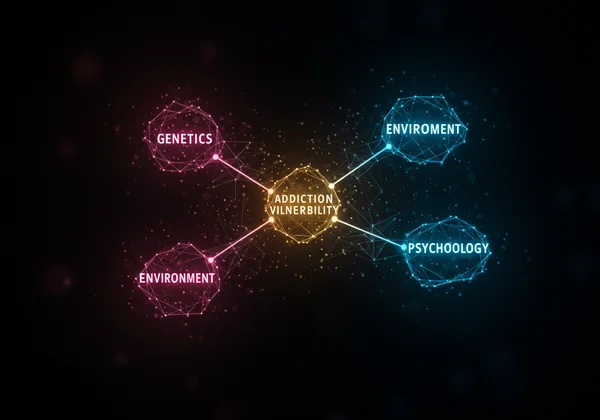
The reality is that no single personality profile guarantees addiction. It arises from a complex interplay of genetic, environmental, and psychological factors. Focusing on a fixed "personality" ignores the crucial role of life experiences, stress, trauma, and social influences. A better approach is to move away from labels and toward understanding specific, changeable vulnerabilities and behaviors.
Why the Term "Addictive Personality" Can Be Misleading
This label is counterproductive. It suggests a permanent, unchangeable flaw rather than a set of behaviors that can be managed. This leads to stigma and prevents people from seeking help, as they might feel shame about a fundamental part of who they are. Believing you are "just an addict" can become a self-fulfilling prophecy.
Instead of a label, it’s more accurate to think in terms of a risk spectrum. Certain traits might place you at a higher point on that spectrum, but they do not define your destiny. Understanding these specific traits is the key to empowerment, giving you concrete areas to work on for personal growth and well-being.
Focusing on Behaviors and Vulnerabilities, Not Labels
The conversation is shifting from "what you are" to "what you do and why." By examining specific habit patterns and underlying emotional triggers, we can gain a much clearer picture of addiction risk. This approach is empowering because behaviors can be modified and coping skills can be learned.
Recognizing your personal vulnerabilities allows you to build resilience. Are you prone to acting on impulse? Do you struggle to manage stress? These are not character flaws; they are areas where you can develop new strategies. This proactive mindset is the foundation of self-awareness and the first step on any path to change. Ready to explore your own patterns? A confidential self-assessment can be a great starting point.
Recognizing True Addiction Risk Factors & Behavioral Traits
While a single "addictive personality" doesn't exist, research has identified several psychological and behavioral traits more commonly associated with a higher risk for developing addictive behaviors. These are not guarantees of addiction but are important factors to be aware of. Understanding them can provide valuable insight into your own tendencies.
These factors often intersect, creating a unique vulnerability profile for each individual. Recognizing them in yourself is not a cause for alarm, but an opportunity for greater self-understanding and taking informed, positive steps.
The Role of Impulsivity and Sensation-Seeking in Addiction
Two of the most studied traits linked to addiction are impulsivity and sensation-seeking. Impulsivity is the tendency to act on a whim without fully considering the consequences. This might manifest as making rash decisions, having difficulty delaying gratification, and prioritizing short-term rewards over long-term goals.
Sensation-seeking is a trait characterized by the desire for novel, varied, and intense experiences. Individuals high in this trait may be more drawn to risky behaviors, including substance use or compulsive activities like gambling, because they provide a powerful rush of excitement or dopamine. When combined, high impulsivity and a strong drive for sensation can create a potent risk factor for addiction. If these traits resonate with you, a compulsive behavior test might offer deeper insights.
Emotional Regulation Challenges & Coping Mechanisms
Many people who develop addictions struggle with emotional regulation. They may experience emotions more intensely or have difficulty managing feelings of stress, anxiety, sadness, or anger in healthy ways. In these cases, a substance or a behavior (like shopping, gaming, or eating) can become a form of self-medication—a way to numb painful feelings or escape from overwhelming situations.
This creates a powerful cycle: you feel bad, you engage in the behavior to feel better, and the temporary relief reinforces the habit. Over time, the brain comes to rely on this external solution as its primary way to manage emotions, making it harder to cope without it. Understanding your emotional triggers is a critical part of breaking this cycle, and you can begin to explore self-assessment tools to gain more insight.
Understanding Genetic Predisposition and Environmental Influences
It's crucial to acknowledge that personality traits are only part of the story. Genetics play a significant role; studies show that addiction can run in families, suggesting a genetic predisposition. If you have a close relative with a substance use disorder, your own risk may be higher.
Equally important are environmental influences. Growing up in a household where substance use is normalized, experiencing trauma or chronic stress, and having easy access to substances or opportunities for addictive behaviors all increase vulnerability. Peer pressure, especially during adolescence and young adulthood, is another powerful environmental factor. Your risk is not determined by your personality alone, but by the complex web of your biology and life experiences.
Your Path to Self-Assessment: Understanding Your Vulnerabilities
Having moved beyond the "addictive personality" myth to explore real risk factors, you can now begin your journey of self-assessment. This isn't about diagnosis; it’s about building self-awareness by honestly and compassionately examining your behaviors and their drivers.
This process empowers you to identify areas of your life where you might want to make a change. Knowledge is the first step toward control. By understanding your unique vulnerabilities, you can develop healthier habits and build a more fulfilling life.
When to Reflect on Your Habits and Patterns
It's a good time to reflect when you notice certain signs. Perhaps a specific behavior is taking up more of your time, energy, or money than you'd like. Maybe you've tried to cut back but found it surprisingly difficult, or you find yourself hiding the behavior from friends and family.
Other prompts for reflection include feeling a loss of control, continuing the behavior despite negative consequences in your relationships or work, or using it as your only way to cope with stress. These are not signs of failure; they are signals that it’s time to pay closer attention. Taking a confidential addiction test can provide a structured way to begin this reflection and gain clarity. An online addiction test is an accessible first step.
Moving Beyond Suspicions: Getting Deeper, Confidential Insights
Thinking about these patterns is a great start, but sometimes an objective tool can help clarify your thoughts. This is where a structured, science-based assessment comes in. Instead of guessing, you can answer a series of questions designed to measure specific behavioral patterns related to things like internet use, alcohol consumption, shopping, and more.
At our platform, we offer a range of completely anonymous and confidential tests. Our tools are based on scientifically validated scales used by researchers and clinicians worldwide. You can get instant, free feedback to help you move from vague worry to clear insight. Start your assessment now to take the first confidential step toward understanding yourself better.

Understanding Your Path: From Traits to Self-Awareness
The idea of an "addictive personality" is a myth, but your vulnerability to addiction is very real. It's shaped not by a single character flaw, but by a unique blend of your temperament, your coping skills, your genetics, and your life experiences. By letting go of a simplistic label, you open the door to genuine self-discovery.
Understanding traits like impulsivity, your methods for handling stress, and your personal history gives you power. It transforms vague anxiety into a clear roadmap for personal growth. The journey from wondering about your habits to truly understanding them begins with a single, courageous step: the decision to seek clarity.
Your path forward is about building self-awareness, not assigning blame. If you're ready to move beyond worry and gain objective insights into your own patterns, explore the resources available. Take a free, confidential, and science-based addiction test to begin your journey of self-discovery today.
Frequently Asked Questions About Addiction Risk & Self-Assessment
Do I Have an Addictive Personality?
As we've discussed, the "addictive personality" is not a recognized clinical diagnosis. Rather than having a specific personality type, individuals may have a collection of traits and risk factors—such as high impulsivity, sensation-seeking, and difficulties with emotional regulation—that increase their vulnerability to developing addictive behaviors. The key is to understand your specific traits, not to apply a broad and misleading label.
What are the Early Signs of Addiction?
Early signs of addiction often involve a loss of control. This can include spending more time or money on a behavior than intended, finding it difficult to cut back, and experiencing cravings. Other signs include neglecting responsibilities at work, school, or home in favor of the behavior, and continuing it despite clear negative consequences to your health, finances, or relationships.
Can I Test for Addiction Risk Online Anonymously?
Yes, absolutely. Confidentiality is crucial for honest self-assessment. Websites like ours are designed to be completely anonymous and secure. You do not need to register or provide any personal information to take an addiction test. This allows you to explore your habits and receive immediate, science-based feedback in a safe and private environment. You can try our free tool today without any privacy concerns.
Is Addiction Considered a Mental Illness?
Yes, addiction, clinically referred to as a Substance Use Disorder or Behavioral Addiction, is recognized as a complex mental health condition by major medical and psychiatric organizations. It is a chronic brain disease characterized by compulsive engagement in rewarding stimuli despite adverse consequences. Understanding it as a medical condition, rather than a moral failing, helps reduce stigma and encourages individuals to seek professional treatment and support.